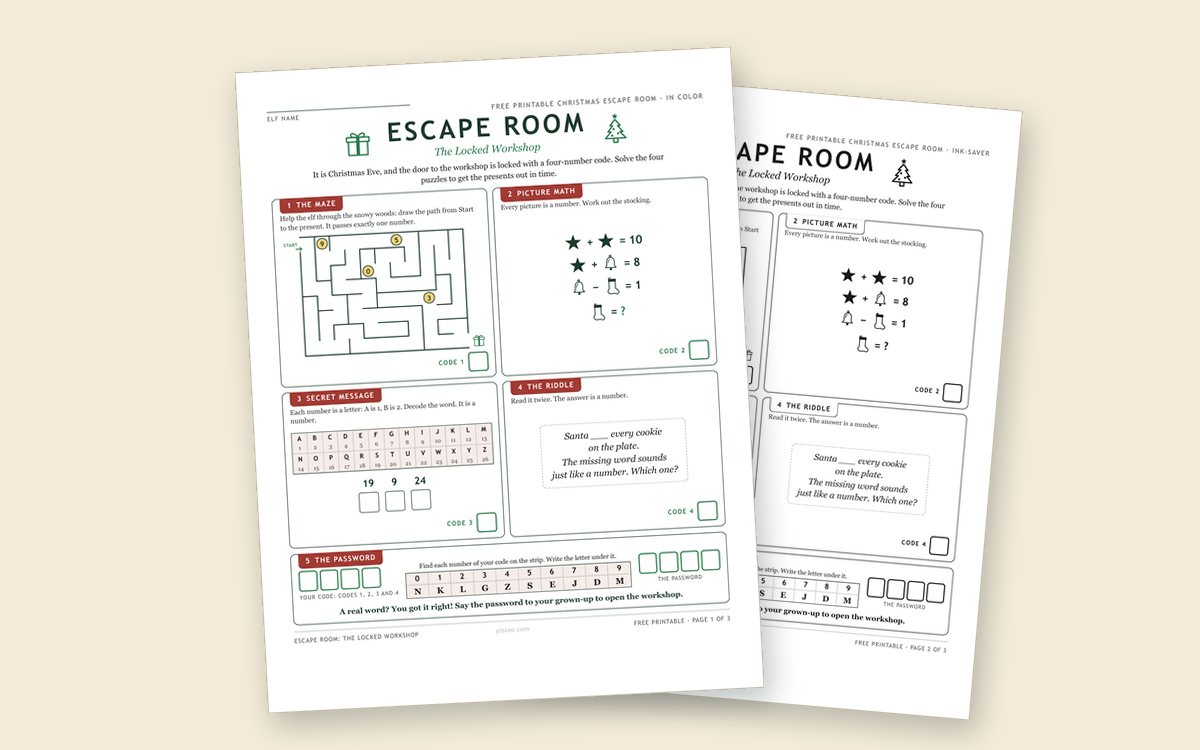
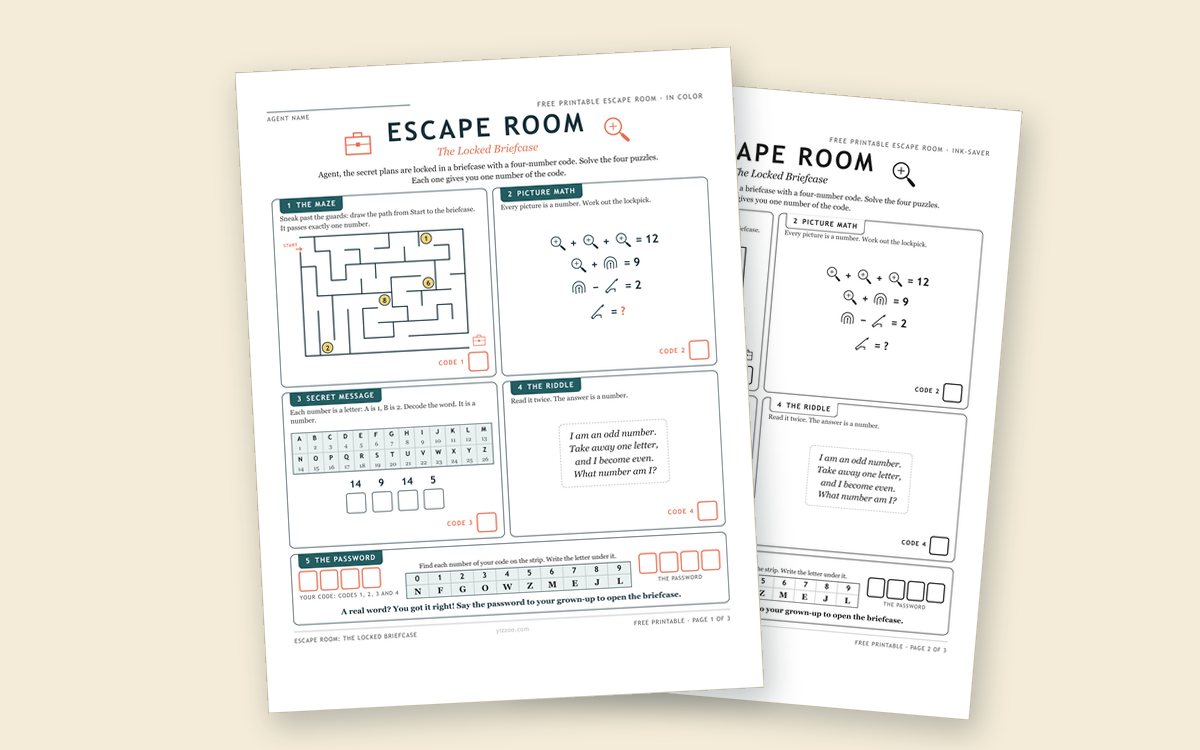
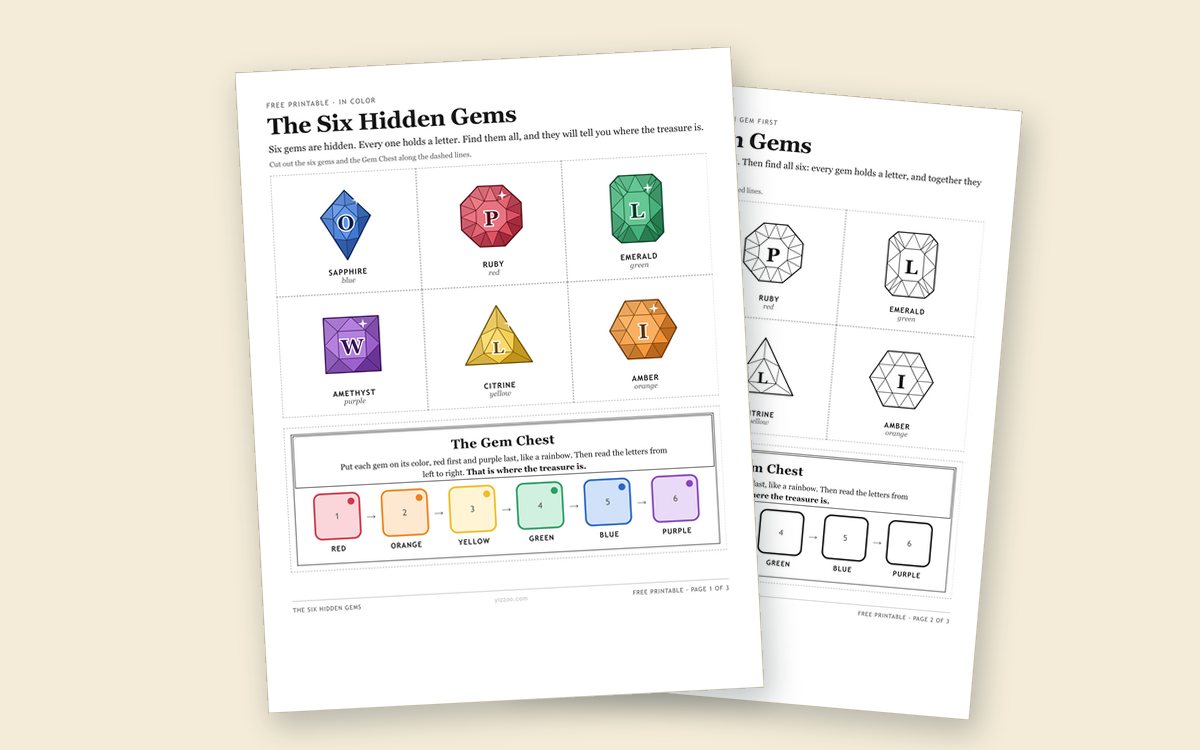
Seven is the age when a home escape room starts to work the way the name promises. A seven year old can read a short clue out loud, count to twenty without losing track, and hold two facts at once for long enough to use them. That is a different child from a six year old, and it needs a different set of puzzles.
They are also still seven. A combination lock with a crowd leaning over it is a test of small fingers they will fail, a riddle with three steps loses them after the second, and anything that feels unfair gets a loud and immediate verdict. Here is what lands, what still fails, and how to run it.
What changes at seven
- They can read one short sentence. Not a paragraph, and not while somebody else shouts the answer. One sentence, read out loud, then acted on.
- They can hold two facts. "Find the blue card with a star on it" works now. Three facts still do not.
- They love a code. A secret alphabet is the most exciting thing in the room at this age. It feels like being let in on something.
- They care about fair. A trick, a red herring, or a clue that only works once you already know the answer will be called cheating, loudly. They are usually right.
What still fails
- Chains of three. Solve one thing to find a second that opens a third, and by the third they have forgotten why they wanted it. Keep every chain to two links.
- Fiddly locks under pressure. A three digit padlock is fine at a kitchen table with one child and no hurry. With four children and a clock, the dials slip and the lock stays shut on a correct answer, which is the worst thing a puzzle can do.
- Long reading. Anything longer than a sentence becomes a reading test, and the best reader wins every time.
- Waiting. Something needs to happen every four or five minutes. Not progress, just an event: a find, a check, a reveal.
Five puzzles that work at seven and eight
1. A picture alphabet
Draw ten symbols on a key card, each standing for a letter. Hide a message of three to five symbols somewhere else. Decoding it is matching, which they are quick at, and it produces a word, which feels like magic. Make the word somewhere to look: SOFA, OVEN, BATH.
2. Numbers hiding in plain sight
Write three digits on the undersides of three things in the room. Find all three, put them in the order the clue gives, smallest first or in the order of the colors on the card, and that is the code. It is finding, counting and ordering, and they are proud of all three.
3. A riddle that points at a place
One sentence, and the answer is somewhere to search. I have hands but I cannot clap sends them to the clock. The riddle is not really the puzzle. Walking to the clock and finding something taped behind it is.
Try the riddle on a child who is not playing. If they get it in under a minute, it is the right size.
4. The torn map
Draw a simple map of one room, tear it into three pieces and hide the pieces. Each find is a small win, and putting it back together is a group moment: everybody leans in at once.
5. Sort it to open it
Four objects of different sizes, each marked with a digit. Line them up from smallest to largest and read off the code. There is nothing to read and nothing to remember, only arranging, and they can check their own answer by looking at it.
Locks at this age
A padlock can work at seven and eight, on three conditions. Use one lock in the whole game, not four. Choose one with big, clear digits. And let an adult hold it while a child turns the dials, so the lock is the only thing moving.
Otherwise, be the lock yourself. They tell you the code, you check it against your card, and you hand over what they won. It never jams, it works for every child in the room, and nobody spends the last ten minutes of a party fighting a dial. How to Be a Good Escape Master covers the rest of that job.
Running it
- Read the clues out loud. Mixed readers are the rule at seven, and reading aloud stops the strongest reader turning the game into a solo.
- Two to six players. Pairs are ideal. Past six, somebody is always at the back seeing nothing.
- Thirty to forty minutes. Enough for five or six puzzles, with time to celebrate each one.
- Hand out jobs. Decoder, map keeper, holder of the numbers. A job is worth more to a quiet child than a hint.
When it stalls
It will, usually on the last find. Give it two or three minutes, then climb a hint ladder rather than jumping straight to the answer.
- Narrow the room: it is somewhere near the window.
- Narrow the place: it is under something.
- Point: have you looked under the plant pot?
Each step keeps the finding theirs. The answer said out loud ends the game for everybody, and they all know who finished it.
Two adventures on Yizzoo are already built for this age. Pirate Treasure Quest starts at six and is all finding and counting. Spy Mission starts at eight and adds a code.